
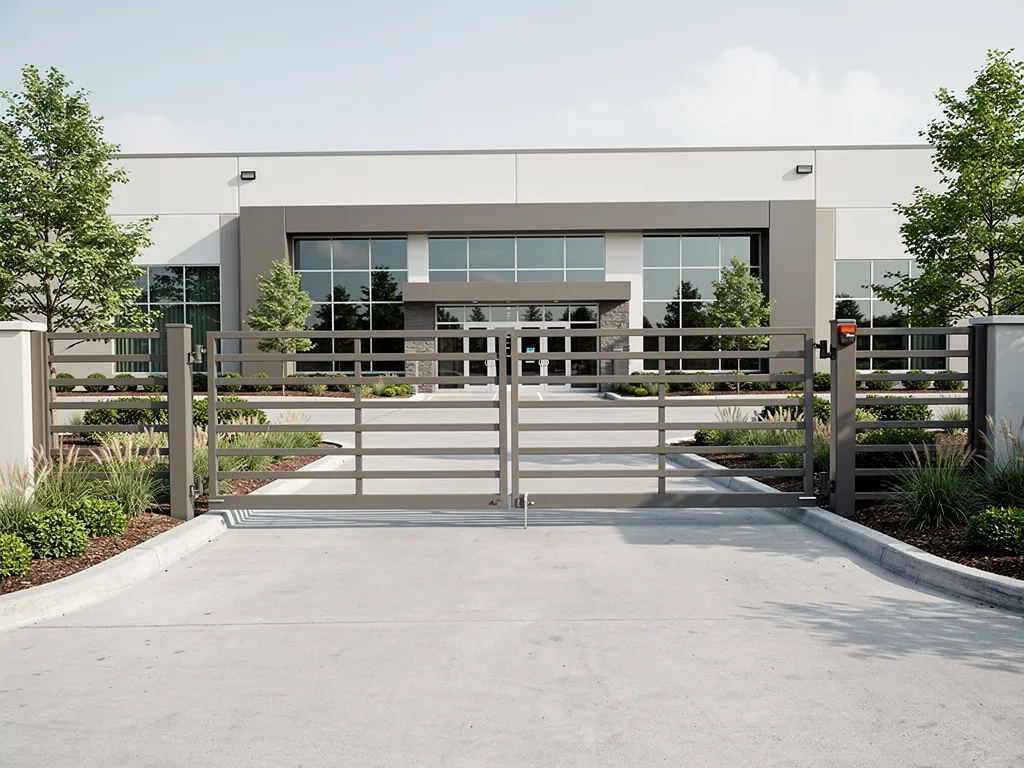
Custom driveway gates from Fencer 3000 provide residential and commercial properties with tailored security and curb appeal. Materials range from durable steel to elegant aluminum, with designs including swing, sliding, and cantilever styles. Automation and access control systems integrate seamlessly, enhancing property value while restricting unauthorized entry.
Why Invest in Custom Driveway Gates?
Custom driveway gates deliver a dual benefit that off-the-shelf alternatives cannot match. A tailored gate strengthens perimeter security while transforming a property’s first impression. Property owners who overlook this upgrade risk leaving a critical access point vulnerable and missing a proven method to elevate curb appeal.
What security advantages do custom gates provide over standard models?
A custom gate creates a formidable physical barrier against unauthorized entry. Unlike generic prefabricated units, these designs integrate seamlessly with a property’s specific layout and existing fencing. Fencer 3000 specializes in secure, high-performance fencing for businesses, contractors, municipalities, and large organizations. This expertise translates directly to residential projects where robust access control is non-negotiable.
How do custom gates enhance property value?
A well-designed entry gate shapes a visitor’s entire perception of an estate. The structure frames the home and signals meticulous ownership before anyone reaches the front door. Residential entry gate installations influence complex pricing factors tied to materials, style, and craftsmanship. An investment in a distinctive, architecturally compatible gate often recoups its cost through strengthened market appeal and faster buyer interest.
Material selection drives both performance and aesthetics. Common options include vinyl, wood, chain link, steel, and aluminum. Each material suits different security priorities and architectural styles. An automatic driveway gate adds a layer of convenience that manual gates lack. Motorized operation allows residents to control access without leaving a vehicle, a critical feature during inclement weather or late-night arrivals.
Design priorities diverge sharply between residential estates and commercial facilities. A home entry gate emphasizes ornamental details and landscape harmony. A commercial security gate prioritizes brute-force resistance and traffic throughput. Fencer 3000 addresses both categories through its custom gates and automation services, applying commercial-grade engineering principles to residential installations. The result is a gate that performs reliably under daily use without sacrificing visual refinement.
Which Gate Material Suits Your Property Best?
The right choice balances aesthetic goals against practical demands like weather exposure and daily use cycles.
Custom driveway gates succeed or fail on this single decision. A poor material match leads to premature rust, warping, or sagging that compromises both function and curb appeal. Property owners who skip this analysis often face replacement costs years ahead of schedule.
What is the most durable material for a residential entry gate?
Ornamental wrought iron and steel deliver timeless strength. These metals accept custom scrollwork and intricate detailing that elevate a property’s entrance. Fencer 3000 notes that the optimal selection varies based on security requirements, visibility, aesthetic appeal, budgetary constraints, and maintenance obligations. Steel gates require periodic rust prevention. Wrought iron demands similar vigilance against corrosion.
How does aluminum compare to steel for driveway gates?
Architectural aluminum gates weigh less than steel. This lighter mass reduces strain on automated openers and hinge hardware. Aluminum resists corrosion naturally, which makes it a strong candidate for coastal or high-moisture environments. Maintenance stays minimal across the gate’s service life. The trade-off is structural rigidity. Aluminum deflects more under impact than a comparable steel gate.
Custom wood and composite gates provide warmth, privacy, and traditional design aesthetics. Classic picket, board, lattice, and historical replication styles let homeowners match period architecture or create a distinctive street presence. Wood demands regular sealing and painting. Composite materials reduce that upkeep while preserving the look of natural grain.
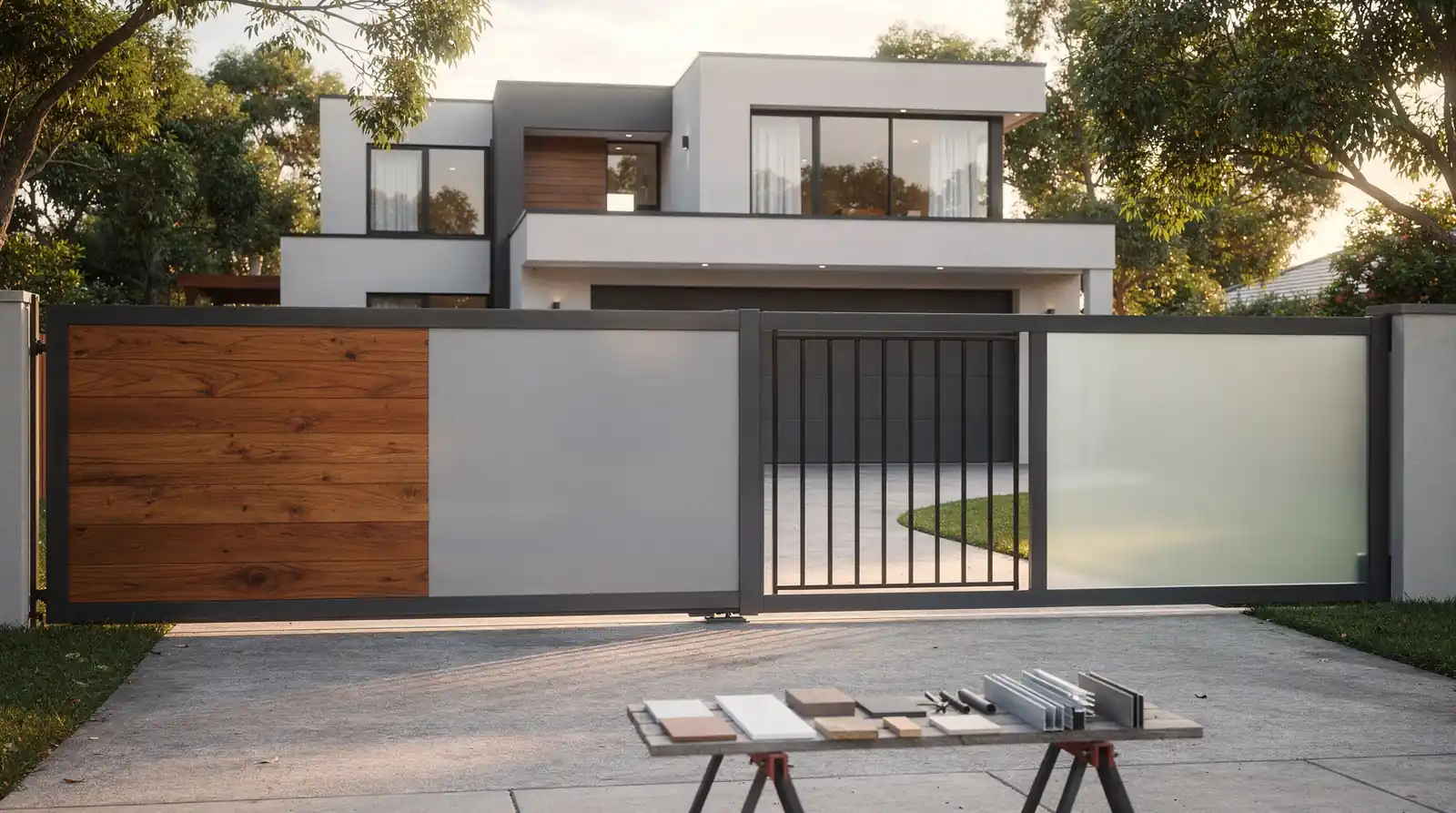
Hybrid gate options combine metal frames with privacy infill panels for balanced performance. A steel or aluminum skeleton supplies rigidity. Wood or composite infill panels deliver visual density and block sightlines. This approach solves the weight-versus-strength equation that complicates single-material designs.
Material selection directly impacts gate durability, maintenance obligations, and overall cost. An automatic driveway gate amplifies these stakes. Heavier materials require more powerful motors and reinforced posts. Lighter materials extend operator life. Fencer 3000’s range of solutions addresses these variables across every common material category. Understanding key factors influencing custom gate prices helps property owners weigh material costs against long-term value before committing to a residential entry gate specification.
Swing or Sliding: Which Gate Mechanism Works?
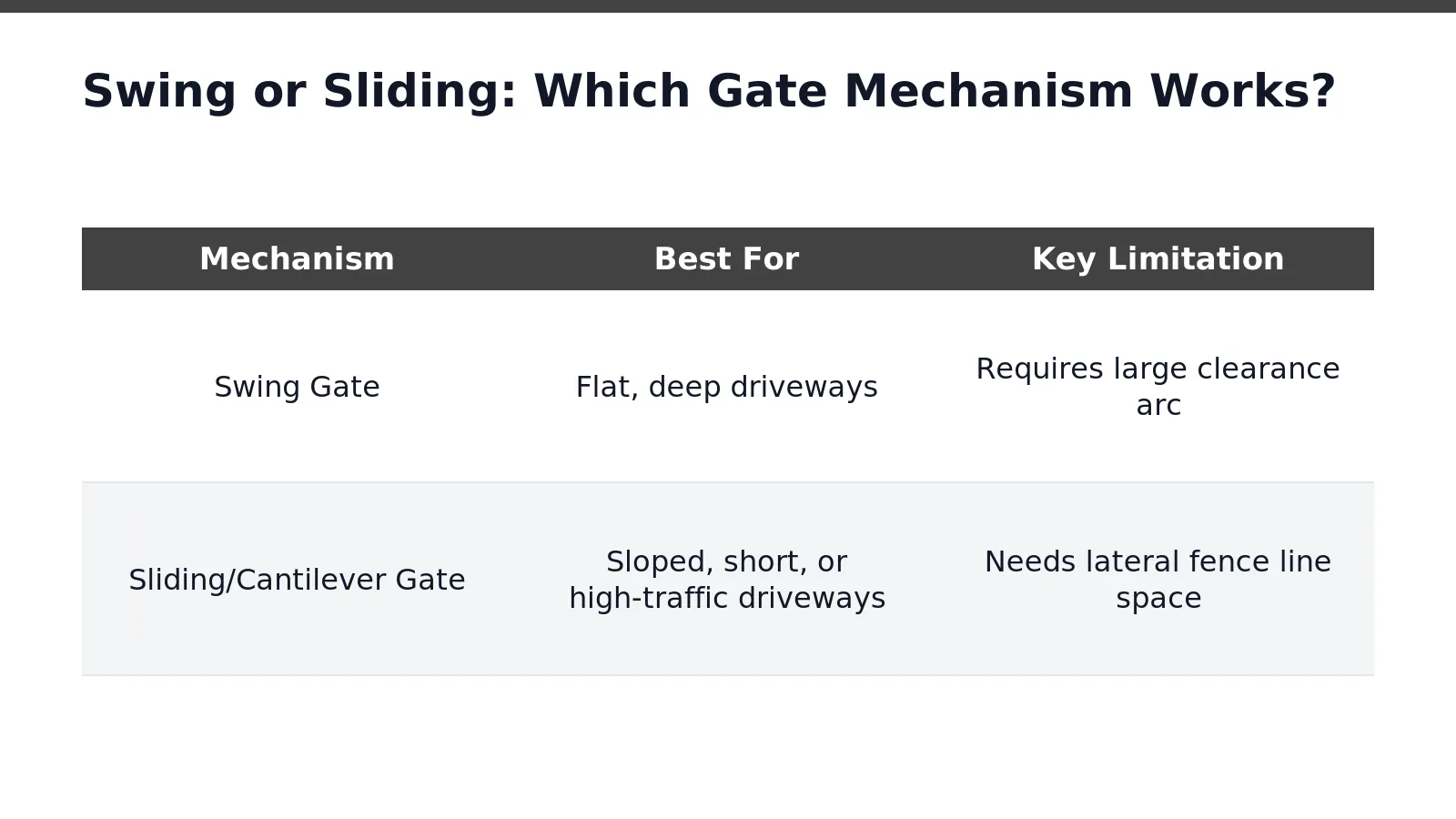
The optimal gate mechanism depends on driveway layout and available space. Swing gates demand clearance while sliding gates conserve it.
Property owners choosing between these mechanisms face a critical trade-off. Selecting the wrong type leads to operational failure, costly retrofits, and daily frustration. The decision hinges on three factors: driveway slope, available arc space, and traffic patterns.
How do swing gates compare to sliding gates for residential driveways?
Swing gates operate like traditional doors, pivoting inward or outward on hinges. Single and bi-parting configurations accommodate different driveway widths. These gates require substantial flat clearance in front of and behind the opening. A sloped or short driveway makes swing operation impractical. The mechanism itself is straightforward, which simplifies maintenance over decades of use.
Sliding and cantilever gates move laterally along the fence line. They never swing into the driveway or the street. This makes them the definitive solution for properties with steep inclines or limited depth. Slide and roll gates provide reliable operation where swing clearance is limited, gliding on tracks or suspended rollers. The space-saving design eliminates the arc radius problem.
What makes an automatic driveway gate mechanism reliable long-term?
Mechanism choice directly affects installation complexity and long-term operational reliability. A swing gate motor works against wind resistance and hinge wear. A sliding gate motor contends with track debris and roller friction. Fencer 3000 addresses these variables through access control and motorized gate solutions configured for each property’s specific geometry. The company’s approach to comprehensive vehicle gate systems ensures the motor and mechanism are matched from the start.
An automatic driveway gate fails prematurely when the underlying mechanism fights the terrain. Cantilever systems eliminate ground-track jamming in freeze-thaw climates. Swing operators strain under repeated wind loads on large solid panels. Matching the mechanism to the site prevents these predictable breakdowns. A residential entry gate that operates smoothly for years begins with this single correct decision.
How Does Automation Enhance Your Entry Gate?
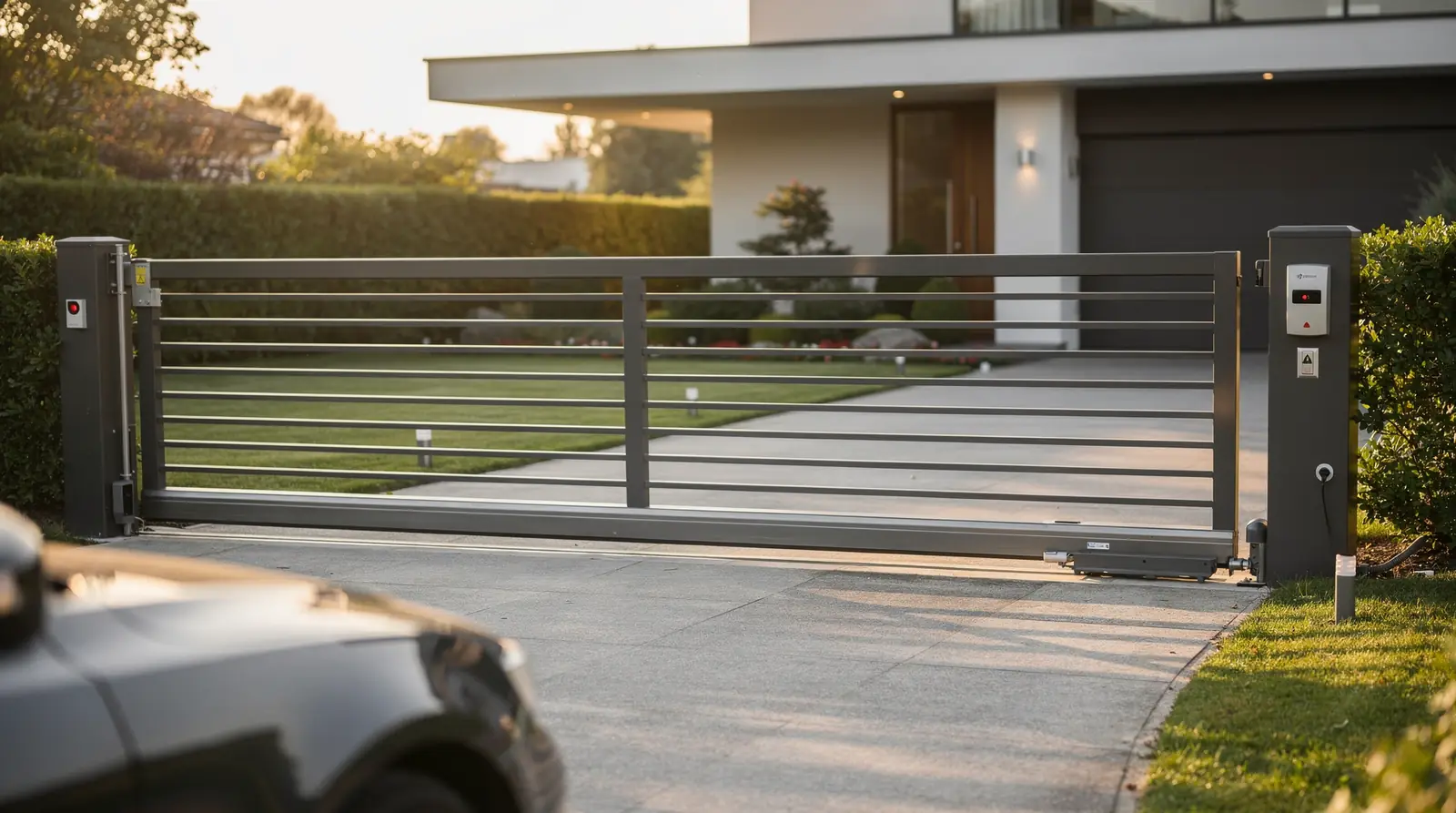
Automation transforms a static barrier into an intelligent access system. An automatic driveway gate eliminates manual operation while strengthening perimeter security through integrated technology.
Property owners without automation face daily inconvenience and heightened vulnerability. Manual gates invite unauthorized entry when left open. They also create physical strain and weather exposure during every use. These risks compound over time, eroding both safety and property value.
What Access Technologies Control an Automatic Gate?
Modern systems pair hydraulic operating systems with digital credentials. Keypads, smartphone apps, and RFID readers grant entry without leaving a vehicle. Video intercoms and telephone entry systems enable guest screening from any location. Fencer 3000 incorporates these access control integrations into comprehensive fencing services.
How Do Safety Sensors Protect Users and Vehicles?
Automated gates require multiple fail-safe mechanisms. Photo-eye sensors detect obstructions and halt movement instantly. Loop detectors buried in the driveway prevent closure on stationary vehicles. Auto-reverse mechanisms engage when resistance is encountered. These features meet strict industry standards for residential and commercial installations.
Does Automation Add Value Beyond Convenience?
A quality custom gate improves security, convenience, and home value simultaneously. The investment delivers daily practical returns. Automated operation streamlines deliveries, family arrivals, and service visits. For businesses, a well-designed entrance makes a positive first impression while controlling after-hours access. Fencer 3000 provides motorized gate solutions that integrate these benefits into a single, reliable system.
What Professional Installation Practices Matter?
Professional installation determines whether a gate operates reliably for decades or fails within the first few seasons. Site evaluation, structural engineering, and climate-specific preparation form the foundation of every successful project.
Why does site evaluation come before gate selection?
Topography, drainage patterns, and property line setbacks dictate what gate designs work on a given property. A sloped driveway requires different hardware than a flat approach. Poor drainage around gate posts leads to frost heave and misalignment. Fencer 3000 assesses these variables before recommending any custom driveway gates, ensuring the chosen design fits the land rather than forcing the land to fit the gate.
How do post foundations prevent long-term failure?
Post foundations demand structural engineering that accounts for frost line depth and soil composition. Posts set above the frost line shift within the first freeze-thaw cycle. Proper depth and concrete footing specifications prevent the sagging and binding that destroy gate hardware over time.
Climate resilience proves especially critical for any automatic driveway gate. Operators and sensors exposed to ice, salt, and temperature swings require weather-rated components and sealed connections. A residential entry gate that functions smoothly in July must also perform when temperatures drop below freezing. Professional calibration accounts for thermal expansion in metal components and battery performance in cold conditions.
Alignment and safety compliance separate professional results from costly failures. Gate panels must hang square within millimeter tolerances. Operator calibration sets the correct force limits, speed curves, and obstruction sensitivity. Fencer 3000 operates with a network of skilled professionals to handle projects of all sizes, bringing the expertise needed for proper installation. The company’s commitment to honesty and personal attention on every project translates directly into gates that open and close reliably year after year.
How to Choose the Right Gate Installation Partner?
Selecting a gate installation partner demands scrutiny of proven commercial experience and design capability. A residential entry gate represents a significant investment in both security and curb appeal. Without a qualified installer, property owners risk premature component failure, misaligned automation, and costly repairs that erode the gate’s long-term value.
What credentials should a gate installation company hold?
A company’s project portfolio reveals its capability more than any certificate. Fencer 3000’s work is installed at major commercial properties including Costco, Sobeys, Food Basics, and City of Toronto sites. This track record demonstrates the technical competence required for complex custom driveway gates. A family-run operation adds another layer of accountability. Fencer 3000 is a family-run fencing company based in Mississauga, Ontario. That structure ensures personal attention throughout the project lifecycle.
How does maintenance affect the choice of installer?
The right partner delivers more than installation. Preventative maintenance for hinges, tracks, and gate operators extends gate lifespan significantly. An installer who offers ongoing service plans protects the functionality of an automatic driveway gate long after the initial build. Consulting with fencing specialists ensures the gate design matches property architecture and security needs. From high-security commercial fencing to elegant custom gates, the company offers expert craftsmanship, quick turnarounds, and unmatched service. This combination of design consultation and maintenance support separates transactional contractors from long-term partners.
Conclusion
A custom driveway gate represents a lasting investment in security, convenience, and property value, but its performance depends entirely on professional design, proper site preparation, and ongoing maintenance. Property owners should select an installation partner with proven commercial experience and a commitment to personal accountability, ensuring the gate operates reliably through every season and continues to enhance the property for years to come.
Key Takeaways
- Custom driveway gates provide tailored security and curb appeal that off-the-shelf alternatives cannot match
- Material selection determines a gate’s lifespan, maintenance burden, and security performance
- Swing gates require substantial flat clearance, while sliding gates conserve space for tighter driveways
- An automatic driveway gate adds convenience by allowing residents to control access without leaving their vehicle
Frequently Asked Questions (FAQs)
Q. What materials are available for custom driveway gates?
A. Steel, aluminum, vinyl, wood, and chain link. Steel and aluminum provide durability and security, while wood and vinyl suit different architectural styles.
Q. How do swing and sliding gate designs differ?
A. Swing gates pivot open, requiring flat clearance, while sliding gates move laterally to conserve driveway space.
Q. Does Fencer 3000 serve both residential and commercial properties?
A. Yes. Fencer 3000 delivers custom driveway gates for homes and businesses across the Greater Toronto Area (GTA).